- Automate apps: Zapier (easiest) or Make (cheaper, more powerful).
- Build AI agents: Lindy or Relevance AI · Own your data: n8n (self-hosted).
- Build full AI apps: Bubble, or vibe-code one with Lovable.
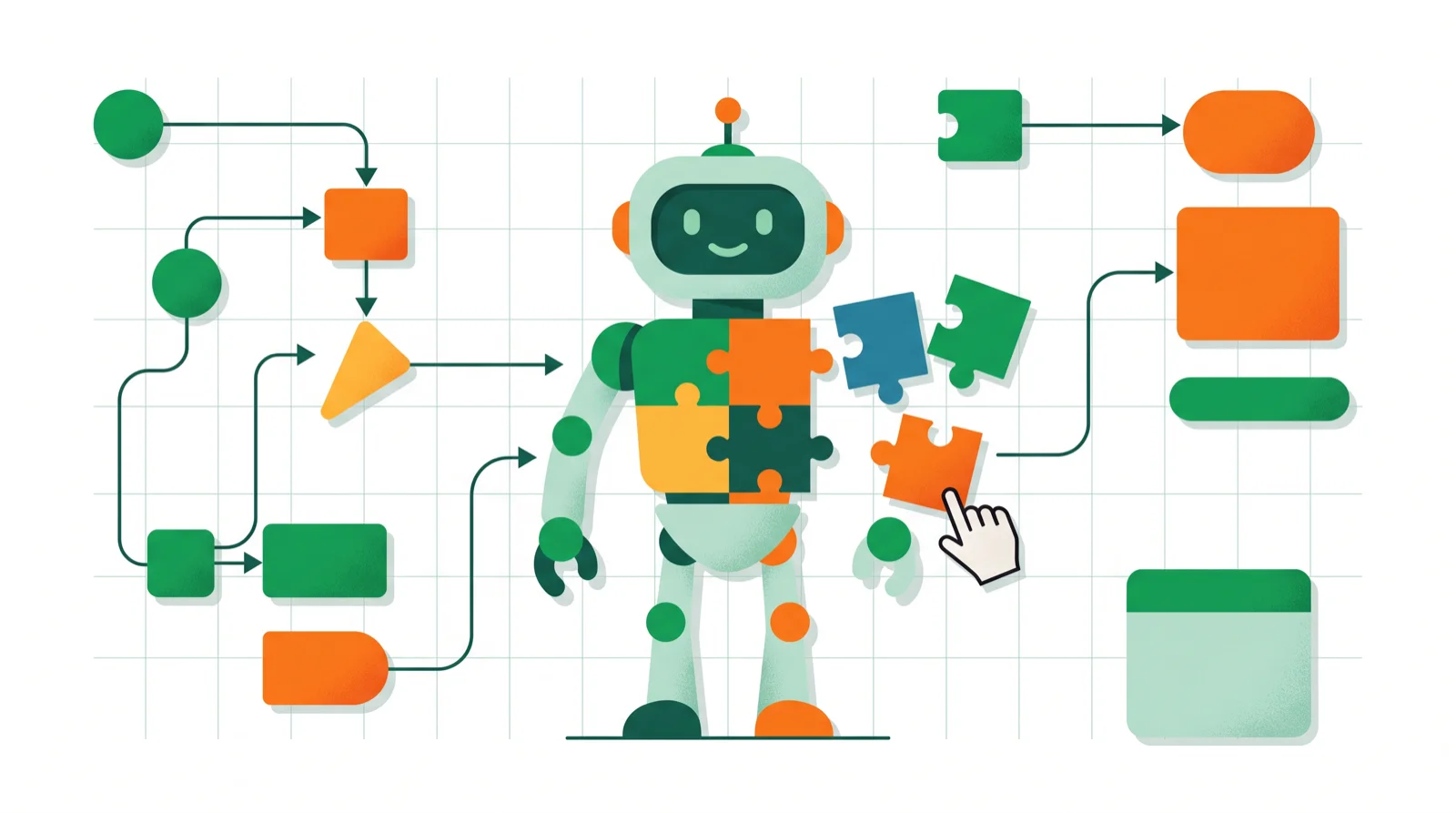
A no-code AI platform lets you build automations, agents, or full apps by dragging blocks around instead of writing code. The catch is that “no-code AI” means three different things — connecting apps, building agents, and building apps — and the best tool depends on which you need. This guide sorts them out with real pricing.
This is the deep-dive companion to our best AI automation tools hub.
The best no-code AI platforms compared
| Platform | Best for | Free | Paid from |
|---|---|---|---|
| Zapier | Connecting apps (easiest) | Yes | ~$20/mo |
| Make | Visual, powerful automation | Yes | ~$9/mo |
| n8n | Self-hosted & open-source | Yes (self-host) | ~$20/mo cloud |
| Lindy | No-code AI agents | Yes | ~$50/mo |
| Relevance AI | Multi-agent teams | Yes | ~$29/mo |
| Gumloop | Cross-team AI workflows | Yes | Contact sales |
| Voiceflow | Chat & voice agents | Yes | ~$60/mo |
| Botpress | Customer-facing chatbots | Yes | ~$89/mo |
| Bubble | Full web apps with AI | Yes | ~$32/mo |
| Lovable | Vibe-coding apps from a prompt | Yes | ~$25/mo |
What is a no-code AI platform?
It’s a tool that lets non-developers build something powered by AI — an automated workflow, an agent that does tasks, or a full app — using a visual builder. You connect blocks, describe what you want, and the platform handles the code underneath. Three families matter: automation (connect apps), agent builders (autonomous AI helpers), and app builders (real software).
Automation platforms (connect your apps)
1. Zapier — easiest to start
Zapier connects 6,000+ apps and now adds AI steps and agents. If you want a form to trigger an email, a Slack ping, and a spreadsheet row without thinking about it, this is the gentlest on-ramp. It’s not the cheapest at scale.
Best for: beginners connecting everyday apps. Zapier alternatives
2. Make — more power for less money
Make’s visual canvas shows every step as connected dots, which makes complex, branching automations easier to picture. It’s cheaper than Zapier per operation, with a steeper but rewarding learning curve.
Best for: complex workflows on a budget. Zapier vs Make
3. n8n — own your data
n8n is open-source and can be self-hosted, so your data and API keys stay on your server. The pick for technical teams that want control and no per-task ceiling.
Best for: self-hosting and privacy. Read our n8n review
AI agent builders (helpers that do tasks)
4. Lindy — no-code agents for non-technical teams
Lindy builds AI assistants that handle email, scheduling, and repetitive operations from plain instructions. The friendliest way to get an agent doing real work without touching code.
Best for: solo operators and small teams. Price: free tier; paid ~$50/mo.
5. Relevance AI — build a team of agents
Relevance AI lets you assemble multiple agents that work together on a process, like a small AI workforce. Strong for sales and ops teams that want more than a single bot.
Best for: multi-agent workflows. Price: free tier; paid ~$29/mo.
6. Gumloop — workflows across departments
Gumloop chains AI steps into shareable workflows that non-technical teammates can run, with MCP support for connecting data sources. Good for standardizing repeatable AI processes across a company.
Best for: cross-department automation.
Conversational agent builders
7. Voiceflow — chat & voice agents
Voiceflow is the go-to for designing conversational agents across chat and voice, with a clean flow builder teams can collaborate in.
Best for: voice and chat assistants. Price: free tier; paid ~$60/mo.
8. Botpress — customer-facing chatbots
Botpress pairs a visual flow builder with a generous free tier for building support and lead-gen chatbots you can embed on a site.
Best for: website chatbots. Price: free (1K messages); paid ~$89/mo.
App builders (real software)
9. Bubble — full web apps with AI
Bubble builds production web apps visually, with AI features and plugins baked in. The most mature no-code app platform if you’re shipping a real product.
Best for: founders building an app. Price: free plan; paid ~$32/mo.
10. Lovable — vibe-code an app from a prompt
Lovable turns a plain-English description into a working app you can edit and deploy, part of the new “vibe-coding” wave. The fastest way to a prototype, though you’ll still review what it builds.
Best for: quick prototypes and MVPs. Price: free tier; paid ~$25/mo.
Which no-code AI platform should you pick?
- Connect apps, keep it simple: Zapier.
- Complex automation, save money: Make.
- Self-host and own data: n8n.
- An agent that does tasks: Lindy (simple) or Relevance AI (teams).
- A support chatbot: Botpress or Voiceflow.
- A full app: Bubble (production) or Lovable (fast prototype).
How to choose
- Pick the family first. Automation, agent, or app — they’re built for different jobs.
- Start on the free tier. Build one real workflow before you pay.
- Watch the pricing model. Per-task (Zapier), per-operation (Make), or flat self-host (n8n) add up very differently at scale.
- Check the integrations. Make sure it connects the apps you already use.
Bottom line
For most people, Zapier (easy) or Make (powerful, cheaper) covers app automation, Lindy or Relevance AI build agents, and Bubble or Lovable build full apps. Choose by the job, start free, and only scale up once one workflow proves its worth. See the automation tools hub for more.
FAQ
What is the best no-code AI platform? It depends on the job: Zapier or Make for app automation, Lindy or Relevance AI for agents, and Bubble or Lovable for full apps.
Can I build an AI agent without coding? Yes. Lindy and Relevance AI let you build agents from plain instructions, and Zapier and Make now include AI agent steps.
What is the best free no-code AI platform? n8n is free to self-host, and Zapier, Make, Botpress, and Bubble all have free tiers big enough to build your first project.
Zapier or Make — which is better? Zapier is easier and has more integrations; Make is cheaper per operation and better for complex, branching workflows.
What is vibe-coding? Describing an app in plain English and letting an AI tool like Lovable build it, then editing the result. It’s the fastest route to a working prototype.
Do no-code platforms scale? Yes, but watch the pricing model — per-task tools get expensive at volume, while self-hosted n8n stays flat.
🧰 More: AI automation hub · Zapier vs Make · Best AI agents
