- What it is: Anthropic’s AI assistant — a chatbot built around writing, reasoning and code rather than breadth of features.
- Best for: writing that gets published, long documents, coding, and anyone who wants editorial feedback rather than cheerleading.
- Not for: image generation, live web research, or people who want one app that does everything.
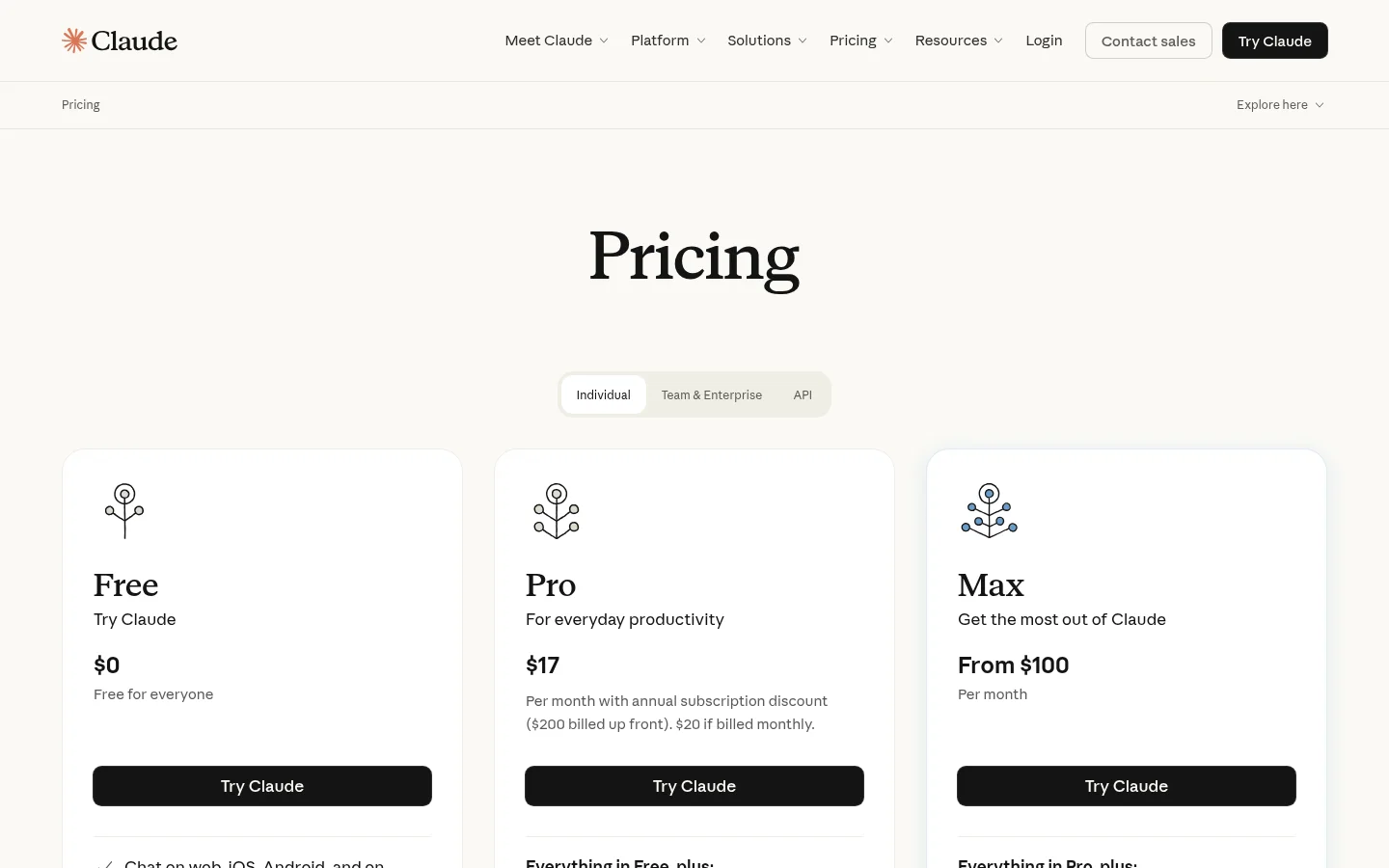
- Price (Aug 2026): Free · Pro $17/month billed annually ($200 up front) or $20 monthly · Max from $100/month.
- Verdict: the best writing and reasoning assistant available; a deliberately narrower product than ChatGPT.
Claude is the AI assistant to buy if you care how the output reads. It writes better prose than its competitors, holds long documents in context without losing the argument, and gives genuinely useful criticism of your own work. What it does not do is generate images, browse the live web as a primary mode, or bundle a dozen adjacent features.
That trade is the whole review. Here is what it is good at, what it costs, and who should not buy it. Part of our AI chatbots and assistants hub.
What Claude is best at
Prose. This is the reason to pick it. Claude holds a register instead of sliding into the same fluent corporate-neutral that most models default to. Dialogue, rhythm, tone-matching and anything with a voice come out noticeably better, and it needs less editing to sound human.
Editorial feedback. Paste a draft, ask what is weakest, and you get an editor’s answer — the paragraph that is doing no work, the claim that needs support, the ending that trails off. Most assistants respond to that prompt with generic praise and a checklist. This is arguably more valuable than the drafting itself.
Long documents. Contracts, research papers, whole manuscripts, large codebases. Claude keeps the thread and its summaries stay faithful to what the document actually argued rather than flattening everything to equal weight.
Code. Claude models sit inside a large share of the coding assistants developers use, which is the strongest available signal about their quality on real code — see best AI for coding.
Refusing to bluff. Relative to its peers, Claude is more willing to say it does not know. That is a feature if you have ever published a confident fabricated statistic.
Where it falls short
- No image generation. If you want text and images in one subscription, this is a hard stop — ChatGPT and Gemini both include it.
- Live web is not its strength. For current pricing, news or anything time-sensitive, a search-native tool answers better. See our Perplexity review.
- Narrower ecosystem. Fewer bundled extras than ChatGPT. Whether that is a weakness or the point depends on what you want.
- Usage limits bite on long sessions. Heavy users on Pro hit caps, which is what the Max tier exists to solve — at five times the price.
- Still fabricates. Less often, and it hedges more honestly, but any number, date or citation still needs checking before publication.
Pricing, and the detail most reviews get wrong
| Plan | Price (Aug 2026) | For |
|---|---|---|
| Free | $0 | Trying it; light daily use |
| Pro | $17/mo billed annually ($200 up front) · $20 if monthly | Most individual users |
| Max | From $100/mo | Heavy daily use, long sessions |
| Team / Enterprise | Custom | Organisations |
Almost every article about Claude quotes “$20/month”. That is the monthly rate. The annual rate is $17/month, charged as $200 once — about 15% cheaper, if you are willing to commit for a year. Worth knowing before you subscribe.
The free tier is not a demo. It is usable for light daily work, and the honest advice is to run it for a week before paying anything.
Claude vs the alternatives
| If you want… | Pick |
|---|---|
| The best writing and editing | Claude |
| One app for text, images, research, extras | ChatGPT — see ChatGPT vs Claude |
| AI inside Gmail, Docs and Sheets | Gemini — see Gemini vs Claude |
| Current answers with citations | Perplexity |
| Cheapest paid tier of any of them | Google AI Plus at $4.99/mo |
Who should buy it — and who should skip it
Buy it if you write for publication, work with long or dense documents, code, or want an assistant that will tell you your draft is not good yet. For writers and editors specifically, nothing else on the market is a closer fit.
Skip it if you want image generation, live web research as your main use, or a single subscription covering the widest possible range of tasks. Skip the paid tier entirely if the free tier already covers your volume — plenty of people never need Pro.
Bottom line
Claude is the best AI assistant for writing and reasoning in 2026, and it is deliberately narrower than its competitors. If your output is words that someone will read closely, it is worth $17/month on annual billing and you will notice the difference in the first hour. If you want one tool that also makes images and browses the web, buy ChatGPT instead — and if you are unsure, the free tier will tell you within a week.
More in the AI chatbots hub, or see the best AI assistants for the full field.
FAQ
Is Claude AI worth paying for? Yes if writing, editing, long documents or code are a real part of your work — it is the strongest tool available for those. If you mainly want image generation or live web search, a different assistant is a better buy.
How much does Claude cost in 2026? Free tier available. Pro is $17 per month billed annually ($200 charged up front) or $20 billed monthly. Max starts at $100 per month, with custom Team and Enterprise pricing.
Is Claude better than ChatGPT? For prose quality, editorial feedback and long documents, yes. ChatGPT is better as an all-rounder because it includes image generation, a wider feature set and stronger live browsing.
Can Claude generate images? No. Claude works with text, documents and code. For images you need a separate tool.
Does Claude have a free version? Yes, and it is usable for light daily work rather than being a limited demo. Most people should run the free tier for a week before subscribing.
Does Claude make things up? Less often than most assistants and it hedges more readily, but it still can. Verify any number, date, name or citation before publishing.